





Is this your situation?
You worked more hours than your visa allows, or you stopped attending your course, or you changed employers without approval, or you let someone else use your visa entitlements. You know you have breached a condition and you are worried about the consequences. You want to know how serious it is and what you should do.
Common visa condition breaches
Condition 8105: working more than 48 hours per fortnight on a student visa. This is the most commonly breached student visa condition and the one most frequently detected through employer records and payroll data.
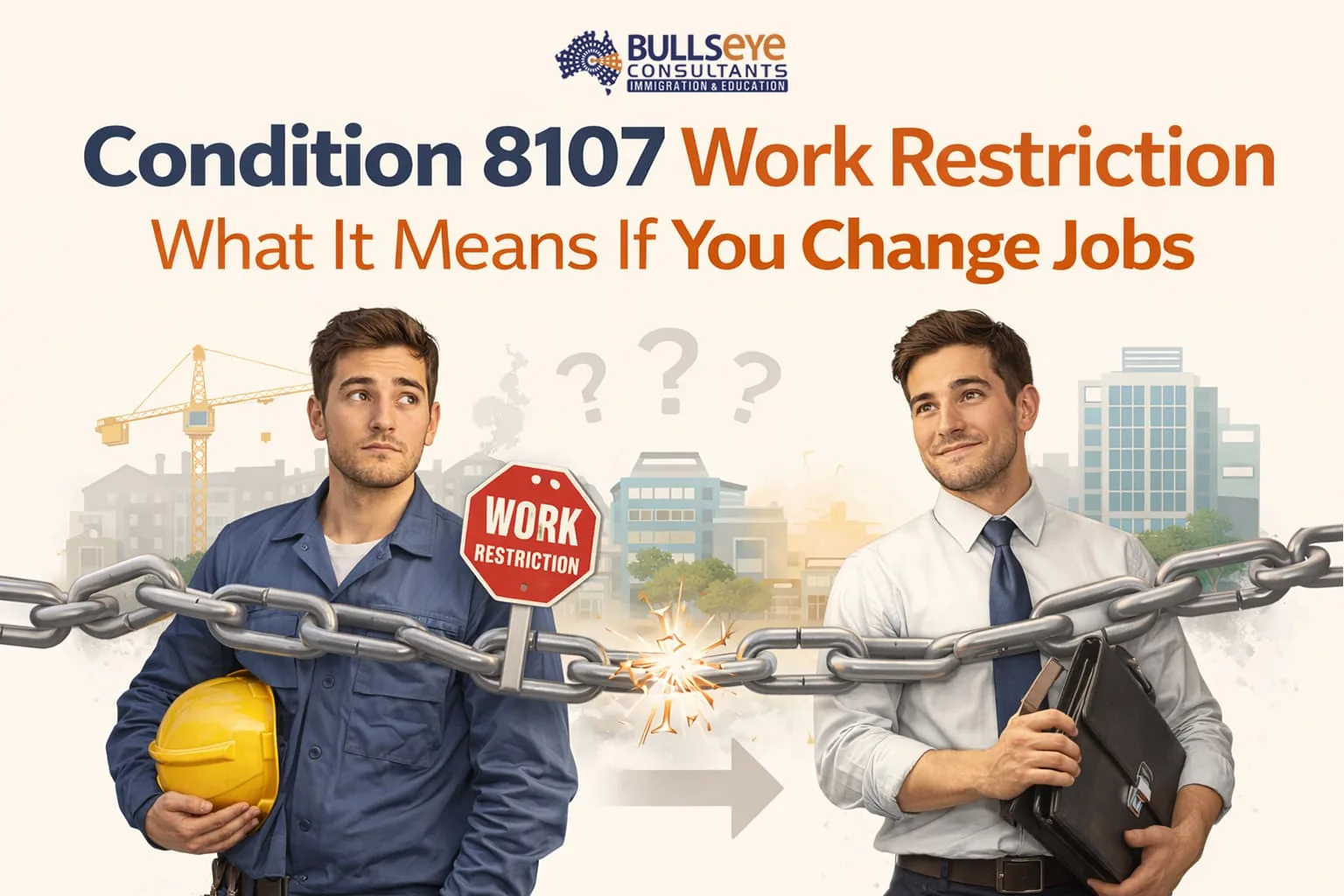
Condition 8107: working for a different employer or in a different occupation on an employer sponsored visa.
Condition 8202: not maintaining satisfactory course attendance or course progress on a student visa. Education providers are required to report students who are not meeting these requirements.
Condition 8101: working when your visa does not allow any work at all (common on some bridging visas and visitor visas).
Condition 8531: staying beyond the authorised period on your visa.
How breaches are detected
Not every breach is detected immediately. But the Department has multiple detection mechanisms. Education providers report students who are not meeting attendance or progress requirements through PRISMS. Employers may report workers during compliance audits. Workplace compliance operations (sometimes called raids) check visa conditions of workers. Data matching between the Department, the ATO, and other agencies can identify people working outside their visa conditions. And of course, anyone can report a suspected breach to the Department.
Even if a breach is not detected while you are on the visa, it may surface during a subsequent visa application. The Department can access your employment history, tax records, and education records. A breach discovered during a later application can trigger a refusal or a PIC 4020 finding if the Department considers that you provided false or misleading information by not disclosing the breach.
What can happen
A detected breach can result in the Department issuing a notice of intention to consider cancellation (NOICC) under section 116. If they proceed and cancel, you lose your visa, section 48 applies, and you face potential detention and removal.
The severity of the Department’s response depends on the nature and extent of the breach. A student who worked 50 hours in a single fortnight due to a rostering error is in a very different position from someone who has been working full time for months while on a tourist visa.
What you should do
If you have already breached a condition, stop the breach immediately. If you were working too many hours, get your hours back within the limit. If you stopped attending your course, contact your education provider about
re-engagement. Do not compound the problem by continuing the breach.
If you receive a NOICC as a result of the breach, respond to it properly with evidence and explanation. The quality of your NOICC response often determines whether the visa is cancelled or preserved.
How Bullseye Consultant can help
Amanpreet Bhangoo (MARN 1573884) handles condition breach situations including NOICC responses and ART reviews after cancellation. He will assess the severity of the breach, advise on damage control, and prepare a response if the Department takes action.
FAQ
Q: If I breached a condition but nobody noticed, should I report it?
This is a judgment call that depends on your specific situation. Self-reporting has advantages (it shows good faith) and risks (it brings the breach to the Department’s attention). A migration agent can advise on the risks and benefits in your particular case.
Q: Will a condition breach affect my future visa applications?
It can, particularly if the breach was serious or if you failed to disclose it in a subsequent application. Non-disclosure of a breach can trigger PIC 4020 (false or misleading information), which carries a 3-year ban.